

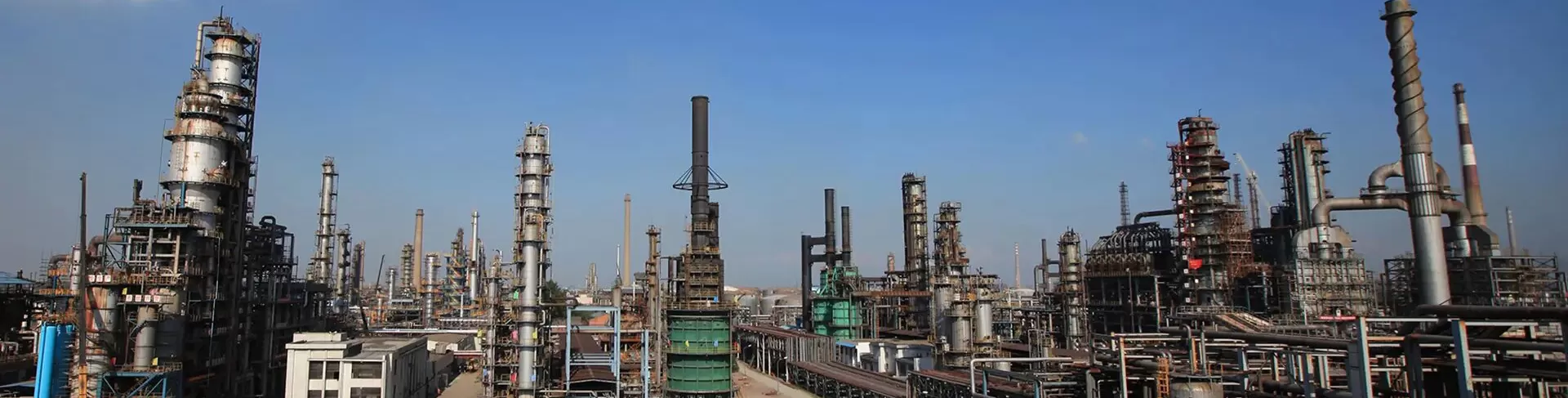
Ammonia synthesis and fertilizer production form the backbone of global food security, with the Haber-Bosch process remaining the cornerstone of ammonia manufacturing. However, traditional systems often face challenges like high energy consumption, inefficient gas separation, and impurity-induced catalyst deactivation. In this context, molecular sieves have emerged as indispensable tools, leveraging their unique structural and surface properties to enhance process efficiency, purity, and sustainability across the entire fertilizer production chain. As a key material in chemical processing, molecular sieves not only optimize ammonia synthesis but also play a vital role in downstream fertilizer manufacturing, from raw material purification to product stabilization.
.jpg)
Enhancing Ammonia Synthesis: The Molecular Sieve Role in Reaction Optimization
In ammonia synthesis, the separation and purification of reactant gases (nitrogen and hydrogen) are critical to reaction efficiency. Molecular sieves, with their uniform pore structure and high adsorption capacity, excel in removing trace impurities such as water vapor, carbon dioxide, and carbon monoxide from the feedstock. By selectively adsorbing these contaminants, they prevent catalyst poisoning and ensure the reactants reach the synthesis reactor in optimal purity. For instance, 5A zeolite molecular sieves, with their well-defined 5 Å pores, effectively separate nitrogen from hydrogen, improving the stoichiometric ratio and boosting the conversion rate of reactants into ammonia. This not only increases production output but also reduces the energy required for repeated gas recycling, aligning with modern industrial demands for energy conservation.
Optimizing Fertilizer Production: From Feedstock Processing to Product Quality Control
Beyond ammonia synthesis, molecular sieves are integral to fertilizer production, spanning multiple stages. In the preparation of raw materials, they dry and purify gases used in processes like urea or ammonium nitrate synthesis, ensuring moisture-free and impurity-free feedstocks that prevent equipment corrosion and product degradation. During fertilizer granulation, molecular sieves aid in controlling particle size distribution by adsorbing excess moisture, resulting in uniform, free-flowing granules with extended shelf life. Additionally, in the production of compound fertilizers, they help separate and recover byproducts, such as unreacted gases or excess nutrients, reducing waste and enhancing the overall economic viability of the manufacturing process. This versatility makes molecular sieves a versatile solution for optimizing every step from raw material handling to final product packaging.
Operational Benefits and Industry Impact: Sustainability and Cost-Effectiveness
The integration of molecular sieves in ammonia synthesis and fertilizer production yields tangible benefits beyond efficiency. Their high thermal stability and long service life minimize downtime and maintenance costs, while their regenerable nature allows for repeated use, reducing material waste. Environmentally, molecular sieves support sustainability goals by lowering energy consumption and curbing greenhouse gas emissions, as they eliminate the need for energy-intensive alternative purification methods. For fertilizer manufacturers, this translates to a dual advantage: improved product quality, higher yields, and reduced operational expenses, making molecular sieves a strategic investment for both small-scale and large-scale industrial operations.
FAQ:
Q1: What properties make molecular sieves suitable for ammonia synthesis?
A1: Molecular sieves exhibit uniform pore sizes, high adsorption selectivity, and thermal stability, enabling efficient removal of impurities and precise control over reactant composition, which enhances reaction efficiency and product purity.
Q2: How do molecular sieves contribute to fertilizer production cost reduction?
A2: By improving gas separation and purification, they reduce energy use, extend catalyst life, and minimize waste, leading to lower operational costs and higher long-term profitability for fertilizer manufacturers.
Q3: Are molecular sieves compatible with different fertilizer production scales?
A3: Yes, molecular sieves are available in various configurations (e.g., pellets, membranes) suitable for small batch processing to large continuous industrial lines, ensuring adaptability across diverse production capacities.