

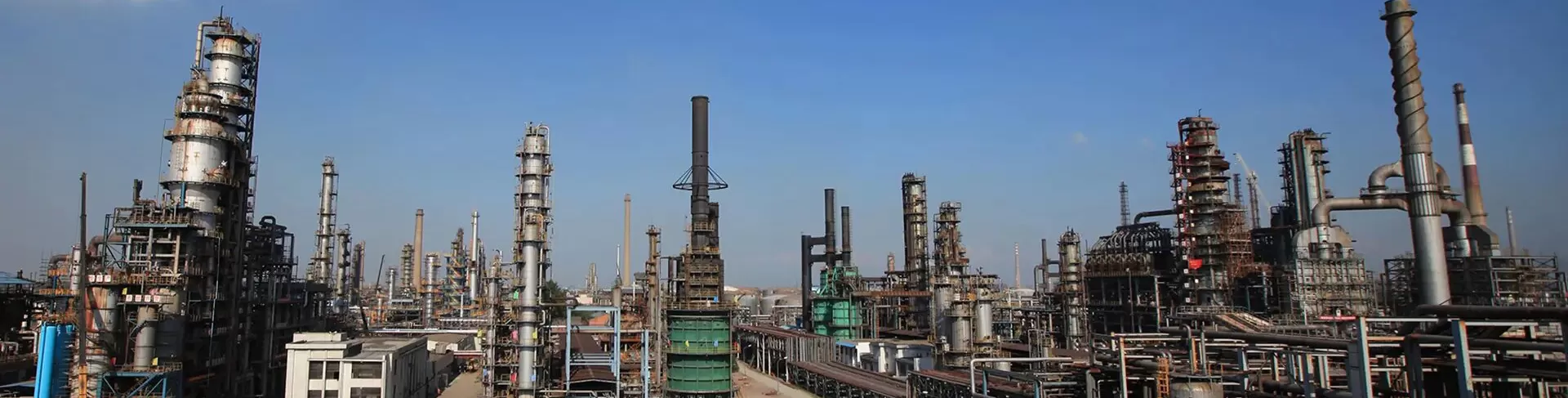
Steam Methane Reforming (SMR) plants stand as the backbone of global hydrogen production, accounting for over 70% of industrial H2 output. As demand for clean energy and chemical feedstocks surges, these facilities face growing pressure to enhance efficiency, reduce energy consumption, and improve H2 purity. Traditional packing solutions, such as metal rings or plastic saddles, often struggle with high-temperature corrosion, low传质效率, and catalyst deactivation in harsh SMR environments (temperatures up to 800°C, H2S-containing feedstocks). Enter Ceramic random packing—a material innovation that addresses these challenges, emerging as a critical tool for optimizing H2 production in SMR plants.
.png)
Key Advantages of Ceramic Random Packing in SMR
Ceramic random packing, typically crafted from high-purity materials like cordierite or alumina, offers inherent properties that align perfectly with SMR demands. Its exceptional thermal stability (withstand temperatures up to 1,400°C) ensures durability in extreme process conditions, eliminating the risk of material degradation. Chemically inert, it resists sulfur poisoning and acid corrosion, safeguarding against catalyst fouling and extending service life. Beyond this, its structured porosity (70-80%) and high specific surface area (200-300 m²/m³) create an optimized gas-liquid contact interface, significantly enhancing mass transfer efficiency. This reduces backmixing and promotes reaction equilibrium, allowing SMR to operate closer to thermodynamic limits—directly boosting H2 yield by 10-15% compared to conventional metal or plastic packing.
Performance Optimization for H2 Production
The design of Ceramic Random Packing is tailored to drive H2 production optimization. For instance, stepped ring or arc saddle configurations maximize flow distribution, minimizing dead zones and reducing pressure drop (from 6-8 kPa in traditional metal packing to 3-5 kPa with ceramics). This lowers pump energy consumption by 20-25%. Additionally, the packing’s surface texture—often engineered with micro-roughness—improves catalyst adhesion, ensuring uniform catalyst distribution and extending its active period by 30-40%. By facilitating the conversion of CH4 and H2O (via the water-gas shift reaction) and suppressing side reactions like carbon deposition, Ceramic Random Packing ensures higher H2 purity (from 96% to 99.97% in industrial trials) and reduced CO content, meeting strict quality standards for H2 applications in electronics, refineries, and chemicals.
Industrial Applications and Reliability
Ceramic Random Packing has proven its worth in large-scale SMR installations. A major chemical complex in Europe, operating a 15,000 Nm³/h SMR unit, reported a 12% increase in H2 output and a 18% drop in natural gas consumption after replacing metal packing with ceramics. The packing’s mechanical strength (compressive strength > 50 MPa) and thermal shock resistance (coefficient of thermal expansion < 1.5×10⁻⁶/°C) enable 4-6 years of continuous operation with minimal maintenance, cutting downtime costs by 35%. This translates to a 2-3 year return on investment, as the initial capital expenditure is offset by long-term savings on energy, catalyst, and upkeep.
FAQ:
Q1: What key properties distinguish Ceramic Random Packing for SMR from other packing types?
A1: High-temperature stability, sulfur tolerance, low pressure drop, and high specific surface area.
Q2: How does packing design impact H2 production efficiency in SMR?
A2: Configurations like stepped rings or arc saddles optimize flow distribution, reducing dead zones and enhancing mass transfer.
Q3: What are the primary indicators of improved H2 production with ceramic packing?
A3: Higher H2 yield, purity (99.9%+), lower pressure drop, and extended catalyst lifespan.